
Temperament is a Social Construction
Temperament is a Social Construction
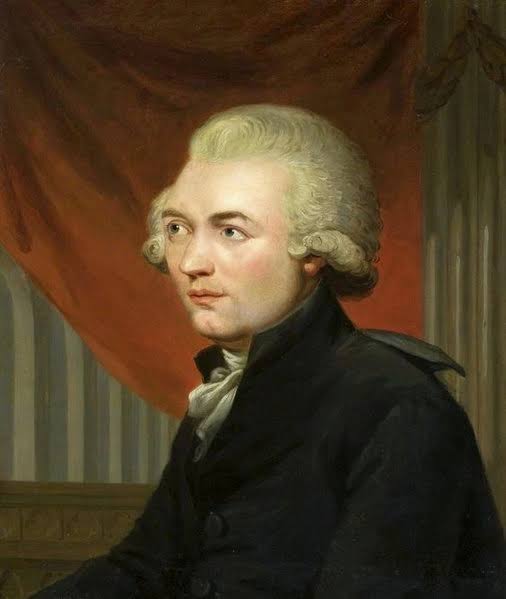
image: Geog Joseph Vogler, who began speaking of *Mehrdeutigkeit*. Gottfried Weber developed the principles much further.
“It follows from the lawless, capricious spirit of the present age, which would egotistically annihilate the world and the universe in order to clear a space merely for free play in the void, and which tears off at the bandage of its wounds as a bond, that this age must speak scornfully of the imitation and study of nature.”
That’s the opening of the Poetic Nihilists section of Jean Paul’s Horn of Oberon (Vorschule der Ästhetik), in Margaret Hale’s translation.
Two Kinds of Social Construction
The éminence grise and I, in our nealry 40 years of back and forth about msuic, did not get far with this before he died. I am now confident that I’m close to dispatching these issues in a way I think he would have liked.
I want to: describe how twelve-tone equal temperament was already beautifully resolved, in advance, by Goethe and Zelter; examine the attack on it; connect it to social construction; and separate a strong sense of social construction from the weak, circular one we actually see practiced.
The weak form is what matters is what gets heard — a closed loop. That introduces a zero in a denominator - a singularit, a moral black hole. It has a name outside musicology: a special case of what sociology calls the Matthew Effect (Merton), or more precisely of performativity in the sociology of markets (Callon, MacKenzie) — a prediction or valuation that creates the very reality it claims only to describe. Attention creates the value that justifies the attention.
I described this to Brickle in my own adaptation of Hermann Broch’s vocabulary: a zero in the denominator. I have since found it has an academic home entirely outside music, in the sociology of markets.
Canon formation as social process has its own literature, which Brickle and I never discussed. I suspect he knew some of it and didn’t dignify it by bringing it up — or steered clear because it sounds like grievance culture. For the record: musicologists studying reception history — who gets performed, recorded, taught, reviewed — have spent decades documenting that these decisions are not neutral readings of quality but the outcome of institutional gatekeeping: who sat on which boards, which critics had which loyalties, which publishers pushed which composers. Katherine Bergeron and Philip Bohlman’s Disciplining Music: Musicology and Its Canons (1992) sits close to the center of this. Brickle would kill me, but I have come to see modernism’s own institutional habits as part of what brought it down — which makes me sound like an apologist for the Rockwell Coup. It is more complicated than that.
Lydia Goehr’s The Imaginary Museum of Musical Works (1992) is adjacent and goes further: the concept of “the musical work” as a fixed, canonizable object is itself a historical construction dating from around 1800, not a timeless category. The whole apparatus for deciding what counts as durable music is constructed — not merely the list of names slotted into it.
I would add that every new-music group, every little fiefdom, defines and holds tight to a constellation of values, often with a master or a hero at the center. Broch describes the pathology of this beautifully, in The Sleepwalkers and in the essays on kitsch: the danger is that the values fly off, untethered. My own recent addition is Jean Paul Richter’s line about the age that would annihilate the world and the universe in order to clear a space merely for free play in the void.Translated into Broch’s terms: don’t let values come untethered from bodily reality — human nature, no less than external nature. Broch and Jean Paul are both staking out a classical position against a romantic one. Which raises the obvious problem: who decides what is natural? What priesthood?
My own confession, offered here rather than hidden: I am among those who take refuge in the small, the quotidian, what is set right before us in a given moment. Richter did this famously, and with humor, and it reached Brahms and Schumann through him. Stifter attended to the small in dead earnest, no irony — closer to Brahms without the humor. And don’t we see the same allegiance, clearly, in Emerson, James, Whitman, Dewey? My modernist heroes, all dead now, were allergic to spectacle even where they weren’t openly aligned with the cult of the small.
Let me not pretend Brickle and I stood outside this. Kentner Anderson and Cygnus is one of those fiefdoms — I use my middle name, Kentner, when I want to advertise my German-American side, and this felt like one of those moments. RSF is one too. Brickle’s advice to me was to ignore the rabble and keep doing what I was doing — commissioning, recording, producing music.
Dina’s mission statement for RSF used the word modernism, and the Fund’s job now is reframing modernism in the aftermath of the Rockwell Coup (below).
We only see social construction’s circularity from a certain distance, once we’ve stepped back from the noise. Inside it, all we see is people asserting and defending values.
I want to set that sense aside and take up another one — the social construction that made twelve-tone equal temperament a fait accompli until very recently.
Ben Boretz supplied the essay that opened this for me: Gary W. Don, “Goethe, Boretz, and the ‘Sensuous Idea,’” Perspectives of New Music 34/1 (Winter 1996), 124–39. It leans on a passage of Goethe’s I now can’t do without:
All arts, as they can only be constructed through practice and thought or practice and theory, appear before me as cities, built upon ground and soil that can no longer be deciphered…. Where the firm ground gave out, they dug and built a wall; yes, perhaps they came across a shifting swamp right next to the cornerstone, where they had to drive in a post. Now that everything is complete and habitable, what distinction remains between what is natural and what is artificial? What is basic and what is supplemental? Where is the substance, and where is the form?
Don gives the German source as the Briefwechsel zwischen Goethe und Zelter 1 (1799–1818), ed. Max Hecker (Insel Verlag, 1987), p. 223. I don’t have the German itself, only Don’s translation and the citation.
Goethe wrote this to Zelter, who had claimed the major third a direct donum — gift — of nature, and the minor third a product of modern artistry. I don’t have Zelter’s own sentence, only Don’s paraphrase, which is what I’m relying on. Goethe’s answer: tuning systems, like art generally, are so thoroughly built up over time that the ground beneath them can no longer be read.
A second instance, underlined years ago in a volume I can no longer put my hands on, so I paraphrase from memory: Goethe discussing a nocturnal scene by Rembrandt, noting that its lighting defies nature — there should be one source, the moon, but the picture has two. He remarks on it because it supports the same point: the made thing has outrun any single, decipherable origin — is it nature, or the artist’s own willful invention?
Temperament is a social construction that served Mehrdeutigkeit — interval puns. That connection has been lost, and I am trying to restore it. Nearly all the compositional techniques that fall out of Mehrdeutigkeit are now barely taught. My agenda is radically conservative in the literal sense: not to stamp out whatever is crowding it out, but to defend Mehrdeutigkeit as the basis, the thing that purchases range, scale, for everything built on it.
In the seventies my father drilled a phrase into his children: it takes one to know one. I now recognize it as pop-Goethe. Goethe returns to this theme often — I am still gathering the specific passages — and William James arrives at something close to it from another direction. In The Varieties of Religious Experience, James argues that a state of consciousness can only be fully known by someone capable of having it: mystical states are authoritative for the one who has them and cannot be dismissed from outside by someone who hasn’t. Recognition requires a prior kinship with the thing recognized. That is close kin to my father’s line — you cannot fully judge, or even clearly see, what you have no capacity to be.
That is how music works too. It sits close enough to that mystical structure without requiring any mysticism at all. To the listener left outside it, the composer of unfamiliar music looks like he’s on something, or on another planet. What is startling now is that a foundational principle of music through 1918 and beyond — Mehrdeutigkeit — is being crowded out by exactly that kind of exclusion.
James’s position is easily mistaken for relativism. It is perspectivism instead. Gertrude Stein: climb the mountain, enjoy the view. Build the perspective, then enjoy what it yields. She translated a mode of construal from cubist painting into cubist prose — she absorbed the mode and took pleasure in exercising it.
Too few people are climbing the mountain anymore. What’s around instead is groupthink, herd mentality, tribal warfare. The Coup called for revanchism and got it. Mehrdeutigkeit is back, but unconsciously, in rudimentary form — which may be exactly where it needs to live for now. I hope the post-Coup version eventually takes wing on its own.
An analogy, to show the method rather than just claim it. I’ve positioned myself so that I can weigh and translate the figures in Yeats and set that constellation against Schiller and Kant’s sublime. From a position I openly admit is only one perspective, I get one reading that carries weight for me. It sounds like relativism. It’s perspectivism. I can read that relationship because I hold my own constellation (I worked on it for years) and can feel which terms resonate enough to be treated as equivalent — which is what Verstehen actually requires: rootedness in the sensual, as against a reason that runs wild, untethered from the body and the earth. The sensual is what Jean Paul means by nature; he opposes our given nature to the newer tendency to annihilate the world and the universe to clear a space for free play in the void. He leveled that charge at Lessing, Fichte, and Novalis by name.
Take any musical tradition the Rockwell Coup buried. Feeling its weight requires having enough of the mechanism of construal already in you to feel what the buried composer was reaching for.
So much of what I love is now buried — collateral damage from the Coup. It turned a firehose on the real misunderstandings and misapplications that had accumulated around modernism, and modernism had that coming. But babies went out with that bathwater — whole families of potent musical modes of construal along with the excesses and weak misreadings.
This is a start. It will need shoring up, clarifying, and qualifying.
The Rockwell Coup
David Amram’s version: John Rockwell convinced Paul Fromm that there had to be an all-Glass concert at Tanglewood. Fromm brought the request to Gunther Schuller, who said he was glad to program Glass but never devoted a whole program to one composer. Fromm fired him for it.
Leon Fleisher’s version: I was at Curtis with the Starobins and Bridge Records, recording Fleisher’s All the Things You Are, which includes George Perle’s three piano solos dedicated to Fleisher — each movement dedicated to someone fired from Tanglewood, including Richard Ortner, who used to call me every summer through the eighties with the good news that I was needed there for guitar and mandolin parts. Fleisher once asked Ozawa what had been missing. Ozawa answered: “Tabasco sauce.”
Rambling first draft:
The éminence grise (Brickle) & I did not get far with this before he died. I’m now confident about dispatching these issues in a way that I think he would have liked.
I hope to
–Descrite how 12EDO was already beautifully resolved by Goethe & Zelter
–Examine the attack on 12EDO.
–Connect 12EDO to social construction.
–Describe a strong sense of social construction vs. a weak, circular form that we actually see in practice.
The weak form of social construction: “what matters is what gets heard” – a closed loop — has a name in sociology rather than musicology: it’s a special case of what’s sometimes called the Matthew Effect (Merton), or more precisely of performativity in economic sociology (Callon, MacKenzie): a prediction or valuation that creates the very reality it claims only to describe. Attention creates the value that justifies the attention.
I described this to Brickle, using my own adaptation of Hermann Broch’s vocabulary – that’s a zero-in-the-denominator argument, and I’m finding now that it has an academic home outside music entirely, in the sociology of markets.
“Canon formation as social process” has a literature. Brickle & I didn’t discuss that literature. I suspect Brickle was aware of some of it and did not dignify it by bringing it to my attention. Or, he avoided it becasue it sounds like greivance culture.
Outlining it here:
Musicologists who study reception history — who gets performed, recorded, taught, reviewed — have spent decades documenting that these decisions aren’t neutral readings of quality but the outcome of institutional gatekeeping: who sat on which boards, which critics had which loyalties, which publishers pushed which composers.
Katherine Bergeron and Philip Bohlman’s edited volume Disciplining Music: Musicology and Its Canons (1992) is close to the center of this — essays arguing that the canon is produced by the discipline’s own institutional habits rather than discovered by disinterested judgment. Brickle would kill me, but I’ve learned to see modernism’s institutional habits bring it down in various ways. This has make me appear to be an apologist for the Rockwell Coup*. It’s much more complicated than that.
Lydia Goehr’s The Imaginary Museum of Musical Works (1992) is adjacent. She argues that the very concept of “the musical work” as a fixed, canonizable object is itself a historical construction dating from around 1800, not a timeless category. The whole apparatus for deciding what counts as durable music is constructed, not just the particular list of names that gets slotted into it.
I’d add that each new music group – each little fiefdom – defines and holds tight to a constellation of values, often with a master or a hero at the center. The potential pathology is described beautifully by Hermann Broch in *The Sleepwalkers* and in his essays on kitsch, etc. — the danger is that the values fly off untethered. My recent addition to this conversation is the famous quote from Jean Paul Richter:
From the lawless, capricious spirit of the present age, which would egotistically annihilate the world and the universe in order to clear a space merely for free play in the void, and which tears off the bandage of its wounds as a bond, that this age must speak scornfully of the imitation and study of nature. — Jean Paul Richter
Translating this to Broch’s language: don’t allow values to become untethered from bodily realities – human nature, no less than external nature. Broch and Jean Paul are both staking out a classical position to the oppose the romantic positon. The problem becomes, who decides what’s natural, what priesthood? My attitute, which I must confess right here, is that I am among those who take refuge in the small, the quotidien, that which sets right before us in a given moment. Richter did that famously, and with humor, influencing Brahms and Schumann. Adalbert Stifter attended to the small with dead earnest, no irony (more Brahms). And dont’ we see strong and clearly present qualities in Emerson, James, Whitman, Dewey, that are in the tradition of the small? My modernist heros, now all dead, were allergic to specacle, if not openly aligned with the cult of the small.
Let’s not deny that Brickle and I do that too. Kentner Anderson & Cygnus is one of those fiefdoms. RSF, likewise. Brickle’s advice to me was: ignore the rabble and keep doing what you’re doing, commissioning, recording, producing music.
Dina’s mission statement for RSF included the word “modernism” and RSF’s job at the moment is reframing modernism in the aftermath of the Rockwell Coup* (see “Rockwell Coup, below).
We start to see social construction’s circularity when we stand at a certain distance, separating ourselves from the noise. When we’re in it, we see people asserting and defending values.
I’d rather focus on another sense, another image of social construction. It’s the social construction that rendered 12-EDO a fait accompli until very recently.
Ben Boretz helped by supplying –
Gary W. Don, “Goethe, Boretz, and the ‘Sensuous Idea,’” Perspectives of New Music 34/1 (Winter 1996), 124–39.
That essay gets leans on this quote from Goethe:
All arts, as they can only be constructed through practice and thought or practice and theory, appear before me as cities, built upon ground and soil that can no longer be deciphered…. Where the firm ground gave out, they dug and built a wall; yes, perhaps they came across a shifting swamp right next to the cornerstone, where they had to drive in a post. Now that everything is complete and habitable, what distinction remains between what is natural and what is artificial? What is basic and what is supplemental? Where is the substance, and where is the form?
Don’s note gives the German source as the Briefwechsel zwischen Goethe und Zelter 1 (1799–1818), ed. Max Hecker (Frankfurt am Main: Insel Verlag, 1987), p. 223
This quote from Goethe was in response to Zelter.
Zelter’s claim, as Don reports it: that the major third is a direct donum — gift — of nature, while the minor third is a product of modern artistry. I don’t have Zelter’s own sentence in his words; only Don’s paraphrase of the position, which is what the book cites.
Don’s note gives the German source as the Briefwechsel zwischen Goethe und Zelter 1 (1799–1818), ed. Max Hecker (Frankfurt am Main: Insel Verlag, 1987), p. 223 — but I don’t have the German text itself, only Don’s English rendering and that citation.
Goethe’s response, is that tuning systems, like art generally, are so thoroughly socially constructed that the soil can no longer be deciphered. Another example is something I underlined years ago. I can no longer put my hands on the volume, so I must paraphrase. Goethe is discussing a nocturnal scene by Rembrandt. He notices that the lighting of the scene defies nature. There should only be one source of light, the moon, but there are two. He notes this becasue it is consistent with the quote above, it supports it.
Temperament is a social construction that served Mehrdeutigkeit (interval puns). That point has gotten lost, and I’m trying to remind the world. All the compositonal techniques that fall out of Mehrdeutigkeit are now largely lost, barely taught. My radically conservative agenda is not to stamp out the value systems that are crowding out Mehrdeutigkeit, but to defend it as the basis, the heart of all the music that earns a certain scale. It purchases range.
In the 70s my father drilled this into his children: It takes one to know one.
I now see this as pop-Goethe. Goethe hits hard on this theme. [I’m looking for some quotes. There are many.] And William James comes to this also.
In The Varieties of Religious Experience, James argues that a state of consciousness can only be fully known by someone capable of having it — that mystical states, for instance, are authoritative for the person who has them and can’t be dismissed from outside by someone who hasn’t. Recognition requires a kind of prior kinship with the thing recognized. That’s close kin to “it takes one to know one”: you can’t fully judge or even see clearly what you have no capacity to be.
That’s the way music works. Music is close enough to that mystical state. There need not be any mysticism involved at all, but for the listener who is left out, the appearance is that the composer who wrote that weird music is on crack, or on another planet. What’s shocking now is that a foundational principle of music up to 1918 and beyond is getting crowded out – Mehrdeutigkeit – interval puns.
James’ positon is easily mistaken for relativism, but in fact it’s perspectivism. Gertrude Stein: “Climb the mountain, enjoy the view.” Build the perspective, enjoy its fruits. She translated cubist art into cubist literature. She absorbed a mode of construal, she enjoyed exercising it.
Too few are climbing the mountain any more. There’s a great deal of group think, herd mentality, tribal warfare.
The Coup called for revanchism and got it. Mehrdeutigkeit is back in an unconscious, rudimentary fashion. And the unconscious is the place for all this to be. I have hopes that the fresh post-Coup Mehrdeutigkeit will take wing.
Here’s an analogy:
I have positioned myself in such a way that I can weight and translate the figurations in Yeats and compare that constellation with that of Schiller/Kant’s notion of the sublime. From a positon that I aver is my own one perspedtive, I get *one* reading that has weight for me. Sounds like relativism, it’s perspectivism.
I can read that relationship because I have my own constellation and I can weight (feel) which terms are equivalent enough to resonate with me. This is the basis of *verstehen*, which implies a rooting the sensual, as opposed to reason, which runs wild, untethered from the sensual (the body, the earth). The sensual is what Jean Paul means by “nature”; he opposes the happy adherance to the given to the tendency to *annihilate the world and the universe in order to clear a space merely for free play in the void*. He accused Lessing, Fichte, Novalis of such.
Take a pair of the musical traditions that have been buried by the Rockwell Coup. Feeling the weight requires having the mechanism of construal in you enough to feel the weight of what the buried composer was trying to do.
So much of the music I love is now buried – collateral damage from the Rockwell Coup. The Coup turned a firehose on the preponderance of misunderstandings and misapplications of modernist modalities, and modernism had that coming. But for sure, babies were drained out in that bathwater – families of musical construciton.
I hope this is a decent start that will need shoring up and clarifying and qualifying.
*The Rockwell Coup
From a conversation with David Amram
John Rockwell convinced Paul Fromm that there must be an all-Glass concert at Tanglewood. Fromm took the request to Gunther Schuller, who explained that he was happy to program Glass but never devoted programs to a single composer. This prompted Fromm to fire Schuller.
Leon Fleisher’s version. You were at Curtis with the Starobins and Bridge Records for the recording of Fleisher’s All the Things You Are, which includes George Perle’s set of three piano solos dedicated to Fleisher — each movement dedicated to someone fired from Tanglewood, including Richard Ortner. (Ortner was the one who called you every summer through the eighties with the great news that you were needed at Tanglewood for guitar and mandolin parts. Fleisher asked Ozawa about the firings, asking, “what was missing?” Ozawa responded, “tabasco sauce.”






William Anderson is a guitarist and composer and an advisor to the Roger Shapiro Fund.